After a life-altering accident seven years ago that left him paralyzed, Dallas Disbro has turned his adversity into an opportunity to pursue his passion and positively impact others. In 2016, he suffered a debilitating neck injury while diving in Ocean City.
In 2018, he created Wheel 2 Win, a 3-on-3 wheelchair basketball tournament at Georgetown University. This event is a fundraiser for his local non-profit organization, The United Spinal Association of Washington, DC, dedicated to promoting awareness and inclusion.
Through his non-profit, Dallas actively supports and empowers the spinal cord injury community in the DMV area through mentoring programs, enriching trips, and essential grants to individuals in need.
Recognizing the inspiring work being done by Dallas and his non-profit, Easterns Automotive Group felt compelled to show their support. Joel Bassam, representing Easterns, joined 7 News to deliver a heartfelt message and a surprise donation of $2,200.
Exotic cars garner attention for their luxury appeal and unique blend of performance and horsepower. To the untrained eye, they may seem frivolous, but car enthusiasts, racers and collectors alike all know exotic cars will always have their place in the automotive industry.
From undeniable power to the complexity of needing special instructions for handling and driving, the top ten exotic cars available in the US are sure to leave an impression.
1. Dodge Viper
Nicknamed the Widow Maker, the Dodge Viper is known for its intense power, exclusivity and for being difficult to handle on the road. It comes with a manual transmission that requires special driving lessons to handle due to the limited driver aids. The Dodge Viper production was introduced in the nineties with the help of Bob Klutz. It boasts the Italian V-10 engine. It is still around today, though it is difficult to maintain due to a limited supply of its unique parts.
2. Falcon F7
Made in Michigan, the Falcon F7 was the supercar dream of Jeff Lemke, Falcon Motorsport CEO. Its name is a tribute to the fact that it has several components that are based on US fighter aircraft, such as the exhaust and instrument gauges. The Falcon had an extremely low production run, and each vehicle is curated for the individual purchaser.
3. Ferrari Roma
The Ferrari Roma is an elegant exotic car from which all exterior detailing was removed to maintain its visual purity. According to Ferrari, this Roma is meant to embody the carefree, pleasurable lifestyle that exemplified Rome in the 50s and 60s.
4. Maserati MC20
The Maserati MC20 is a vehicle of firsts in its line. It is the first Maserati with a carbon fiber monocoque and the first to don the newest high-performance Nettuno engine. The vehicle has a total weight of fewer than 3,307 pounds, which is another one of its standout qualities. The light weight makes it optimal for speed and easy acceleration on the road.
5. Audi RS6 Avant
The Audi RS6 Avant is an exotic wagon that was released in the US in 2020. It has a 4L twin-turbo engine and can go from zero to 60 in less than four seconds. The RS6 is a supercar that can double as a family vehicle, with several safety features such as improved ventilated brakes and lane departure warning, all while toting the horsepower of the average race car.
6. DBS Superleggera
Aston Martin produced, the Superleggera travels with undeniable power and multiple build options, making it lightweight and fast. Whether you opt for the Grand Tourer, Coupe or Volante variety, the Superleggera delivers on performance aerodynamics with its carbon fiber exterior to optimize handling and road stability.
7. Ultimate Aero TT
The Ultimate Aero TT was crafted by SSC North America. The company was originally known as Shelby SuperCars Inc. This was their first vehicle, and it took design notes from Lamborghini as well as Koenigsegg. The Ultimate Aero uses butterfly doors that stand out amongst the competition because they open up and out rather than just up. The TT model arrived in 2007 and was equipped with a twin-turbo LS6 V8, which boasts just over 1,000 horsepower.
8. Chevrolet Corvette Stingray
The Chevrolet Corvette Stingray brought an impressive redesign from the Corvette line. It has an LT2 V8 engine which is the jewel of this vehicle. The mid-engine is visible through the rear hatch window, and the car can accelerate from zero to 60 in less than three seconds.
9. Bentley Continental GT
The Bentley Continental GT can be outfitted with either a V8 or a V12 engine and comes in both the coupe and convertible versions. This car makes the exotic list because of its upscale exterior, exclusive production and luxury price point. Its powerful engine combined with a luxe interior makes it the perfect blend between a supercar and an exotic vehicle.
10. Mosler MT900
The Mosler MT900 was created by Rod Trenne, who helped design the Corvette C5. It also comes in a racing version, the Mosler MT900R, which was specifically designed for speed and is road legal. The Mosler MT900 boasts a 350 horsepower LS6 V6 engine and a rear-wheel drive system allowing it to reach 60 miles per hour in 3.5 seconds.
Visit an Easterns Automotive Near You Today
Are you looking to purchase a used vehicle? Do you want the process to be simple and supportive? At Easterns Automotive, you can visit any one of our eight locations for stellar services as you pick out the vehicle of your dreams. We offer financing and trade-in offers and are ready to help you save today.
Call us at 877-867-0641 to connect with one of our team members.
Electric vehicles are so expensive because they are costly to produce and they are seen as high-value luxury items, so the premium price tag is validated by many purchasers.
Consumer perception has a large effect on the cost of electric vehicles as well. People are willing to pay more for an electric vehicle because they believe they can save with them long term. This allows brands to continue to market electric vehicles as having a higher value than their gas car counterparts.
Beyond these reasons, supply and demand are affecting the current price of electric vehicles. With more gas vehicles than electric vehicles in production, EVs have higher manufacturing costs with a limited supply of the materials needed to produce them. This contributes to the premium price tag for electric vehicle car shoppers.
Why Are EV Batteries So Expensive?
A large part of the high cost of electric vehicles is from the EV batteries. Batteries can range from $4,000 to $20,000, depending on your make and model. The materials that make up EV batteries are more expensive than those in traditional cars because they are larger and can hold more energy.
While innovation is allowing EV battery manufacturers to mediate costs by making the parts with different materials, they are still significantly pricier than their gas vehicle counterparts. It is also costly to invest in the research to develop alternative materials and methods for producing batteries for electric vehicles, which has continued to inflate the cost in recent years.
Low Supply Causing High Purchase Rates
Supplies are also affecting the cost to build electric vehicles, which is inflating the purchase price. Currently, there is a computer chip and semiconductor shortage, which are essential parts for electric vehicles. In some cases, this is stifling manufacturing’s ability to meet EV demand.
Additionally, the supply of neon is crucial to the laser tech used to create semiconductors. Neon is generally sourced from Ukraine, which is currently undergoing its own war and political disarray, directly affecting its economy and production of goods.
Luxury Brands Are Producing Electric Vehicles as Flagships
Another contributor to the high cost of electric vehicles is that many luxury brands manufacture them. Brands like Tesla, Rivian, Mercedes and BMW dominate the electric vehicle market, which inflates the perceived cost, as well as the actual cost of EVs.
As more luxury brands create electric vehicles as their flagship automobiles, people are becoming used to seeing EVs in a certain price range. This has the added effect of allowing them to maintain that price range, even when they are manufactured by more affordable car lines.
Another issue is that luxury lines may not offer gas vehicles to give them a comparative pricing point for their electric vehicle lines. This means that not only are luxury brands able to market electric vehicles at a premium price because of performance and design, but the prices are competing with other luxury vehicle models.
This means that EVs are being sold primarily as luxury vehicles, which in some cases they are, and it warrants a luxury price tag.
How Are Individuals Affecting EV Prices?
Individuals are a key factor in the increasing prices of electric vehicles. Consumer opinion affects the price and the value assigned to goods and services. This is no different within the traditional car market.
Electric vehicles are often marketed as luxury items intended to help consumers save money over time on fuel costs. This has the effect of increasing their perceived value, so people expect to pay more money up front for the future savings.
Not only does this allow brands to charge more, but it’s partially the basis for why prices are still increasing. As the price of gasoline trends up people begin to see more value in electric vehicles, which reinforces their willingness to pay premium prices. This encourages even non-luxury brands to charge what they feel their electric vehicles are worth, with relatively little pushback from their consumer base.
We offer financing and trade-in credits and will work with you to simplify the car-buying process. Give us a call at 877-867-0641 to see how we can help.
Operation Understanding has been giving back to the community for the past 30 years now. The nonprofit brings students together to fight racism, antisemitism and all forms of discrimination.
“A very important part of the program is the emotional component, difficult discussions addressing tough issues and being honest with each other,” says Daniel Nathan, President of OUDC. “The students create a sense of community, and these are 24 students with a very diverse background.”
Youth from Washington, D.C., Maryland, and Virginia (DMV) are brought together by the nonprofit to empower a generation of social justice leaders by promoting respect, understanding, and cooperation.
“Still focused on anti-racism and anti-Semitism, which is still very important, we are looking at other oppressed minorities,” Nathan said. “We are looking at Asian-Pacific Islanders and anti-Muslim and LGBTQ+.”
Karim Marshall, an active board member, is an alum of the program from the ’90s.
“We have expanded the program to explicitly include all communities because we know that in order for us to make meaningful social changes and build coalitions, we need to make sure that everybody is at the table,” Marshall said.
Amazed by the awesome work that Operation Understanding is doing Joel Bassam of Easterns Automotive Group wanted to surprise Operation Understanding DC with a 7 News Helping Hand.
“Operation Understanding DC has been doing amazing work for almost 30 years. Leading change, strengthening identity, and exploring history is such a beautiful mission. The way that you have been able to promote respect and cooperation by fighting discrimination of all forms is a beautiful mission that we want to support. We are donating $2,200 to your cause so you can keep helping those who need it most.”
Nathan expressed that the donation would benefit the nonprofit in a variety of ways such as paying staff and meals for students.
An organization helps those healing from trauma by transforming interior spaces. The CEO and founder, Danielle, created The Oasis Alliance in 2018 and described it as a combination of art, design, and social work. Community-based partners refer clients needing a space makeover and co-create the spaces together so they can be involved in making decisions. On the day of the transformation, the clients are surprised with their new space after volunteers finish putting it together.
Sierra, a victim of domestic violence who came to the DC area through the foster care system, expressed that them transforming her space gave her hope and encouraged her. When she saw the space, she was overwhelmed with tears of joy.
Amazed by the excellent work the Oasis Alliance is doing to help trauma survivors Joel Bassam of Easterns Automotive Group joined in, surprising them with $2200! The founder, Danielle, was filled with joy and shared that it would help cover a few months of storage and could even cover the cost of an installation.
Over the years, you may have heard random myths, theories or “tricks” for enhancing your car’s performance or fuel efficiency. Many of these “tips and tricks” have never actually been proven, and some may be counterproductive.
As a car owner, do your best to decipher facts from myths. You (and your wallet) may be better off for it.
1. The bigger the car, the safer it is
Some drivers are led to believe that if they drive a larger vehicle like a truck or SUV that they will be much safer in the event of an accident. While some trucks can have higher safety ratings compared to sedans, they are also top heavy, which makes them more vulnerable to a rollover crash.
2. Filling your tank with premium fuel will enhance performance
High-end luxury vehicles and sports cars often require premium fuel in order to operate properly. However, if your car only needs unleaded gasoline, paying for premium is simply a waste of money. Unless you are driving a sports car that requires it, premium fuel will not enhance a car’s performance or responsiveness.
3. You should always warm up your car’s engine in the winter
While it is true that engines do need to warm up, that doesn’t mean you need to leave your car running idle for several minutes before you drive it. When you let it idle while you make your coffee in the morning, the car operates at its lowest power (which doesn’t generate as much heat). The best way to “warm up” your engine is to drive it.
4. Using your cell phone at the gas pump could trigger an explosion
This myth dates back to when mobile phones began to grow in popularity when some believed that wireless signals could spark and ignite fuel vapors. There is no scientific evidence or recorded incidents that point to the validity of this myth.
5. Running your air conditioning conserves fuel versus rolling down your windows
Have you ever been low on gas and panicked because it’s too hot to roll the windows down? Despite the weather, it is always better to shut off your car’s air conditioner and roll down the windows in that scenario. The myth that open windows hurt your fuel economy due to drag is not true. While drag does exist and may have a small effect on fuel efficiency, the air conditioning will always use more fuel than driving with the windows down.
6. Boost your car’s power by installing a performance chip
Drivers who are looking to “pimp their ride” might turn to aftermarket parts like performance chips to improve the quality of their vehicle. Although performance chips are marketed by manufacturers as a way to give your car more juice, they don’t actually make your vehicle more powerful.
These chips primarily just manipulate your vehicle’s computer-controlled components to make them perform differently. Some of the safeguards or limits that a performance chips override might have important purposes, which means using a chip could have adverse consequences for your engine.
7. You can charge your car battery just by jumpstarting it
There is nothing worse than realizing you have a dead battery right before you have to go to work or make it to an appointment. When this happens, you can either have the battery jumpstarted or you can buy a new car battery. Keep in mind that jumpstarting a car battery is only a temporary fix — the battery will still need to be replaced (and soon).
8. A car’s safety and technology features will compensate for bad driving habits
Features like driver assistance and backup cameras can give drivers more tools, visibility and warning signs to reduce the risk of accidents, but they can’t fix bad driving. Safety features like blind spot warning and adaptive cruise control are designed to increase accident-avoidance. At the end of the day, a driver can ignore all safety features and continue with their bad driving habits.
9. Hybrid vehicles are much slower
When hybrid vehicles first hit the market, they typically accelerated at a slower rate compared to an average vehicle. Over the last 10 years, manufacturers have improved hybrid models and equipped them to be more fuel-efficient and lighter in weight — both of which allow the hybrid powertrains to operate at an equal power as a regular sedan.
10. Manual transmissions are more fuel efficient compared to automatic transmissions
Remember there haven’t always been automatic transmissions. When they first hit the market, drivers realized they could get better fuel economy with a manual transmission. Of course, automatic transmissions have come a long way since then — some even providing a more fuel-efficient option when compared to manual transmissions.
Find Your Next Used Car at Easterns Automotive
If you live in the Maryland, Virginia or the Greater D.C. area, Easterns Automotive is your source for exceptional pre-owned vehicles. We’ve been serving D.C. and Baltimore car shoppers for more than 30 years and are committed to quality, affordability and flexible financing.
Give Easterns a call at 877-867-0641 or visit one of our eight dealerships today for more information.
Jude Adler is a student from Fairfax County that is helping to feed those in need in his community. The 16-year-old launched a nonprofit called “Mummies for Mouths” that uses repurposed glass jars and turns them into mummy decorations using tape and eyes.
Adler, his classmates, and the community helped to create the mummy decorations and raise money to feed those in need since 2021.
“When we first broke $1,000, that was mind-blowing, and now here we are at $16,000 over two years,” Adler shared. His organization became an official local nonprofit after all their hard work, allowing them to help in many other ways. “We’re donating to multiple service organizations, and we can play a much larger role by applying for discounts at local stores,” Adler said.
On this 7 News Helping Hands, Joel Bassam with Easterns Automotive Group wanted to meet Adler in person because he had a surprise for “Mummies for Mouths.”
“We heard about your story and wanted to support you by donating $2,200 to your cause so you can keep feeding those in need,” Bassam said.
After receiving their surprise donation, Adler allowed Bassam to pick his mummy decoration from his collection.
About a month ago, a terrifying explosion occurred at an apartment complex in Gaithersburg, MD, leaving one person dead and dozens of families having to start their lives over. Across the street is Brown Station Elementary School, where students and staff jumped into action to help during this horrific tragedy.
The school has been receiving donations and giving them to those who lost everything in the explosion. They are now collecting gift cards so families can purchase what they need. We wanted to show our appreciation to the staff and students at Brown Station Elementary, so we took the time to Pay It Forward with Fox 5 DC. Easterns donated gift bags full of goodies as a token of gratitude for the work they have done in the community.
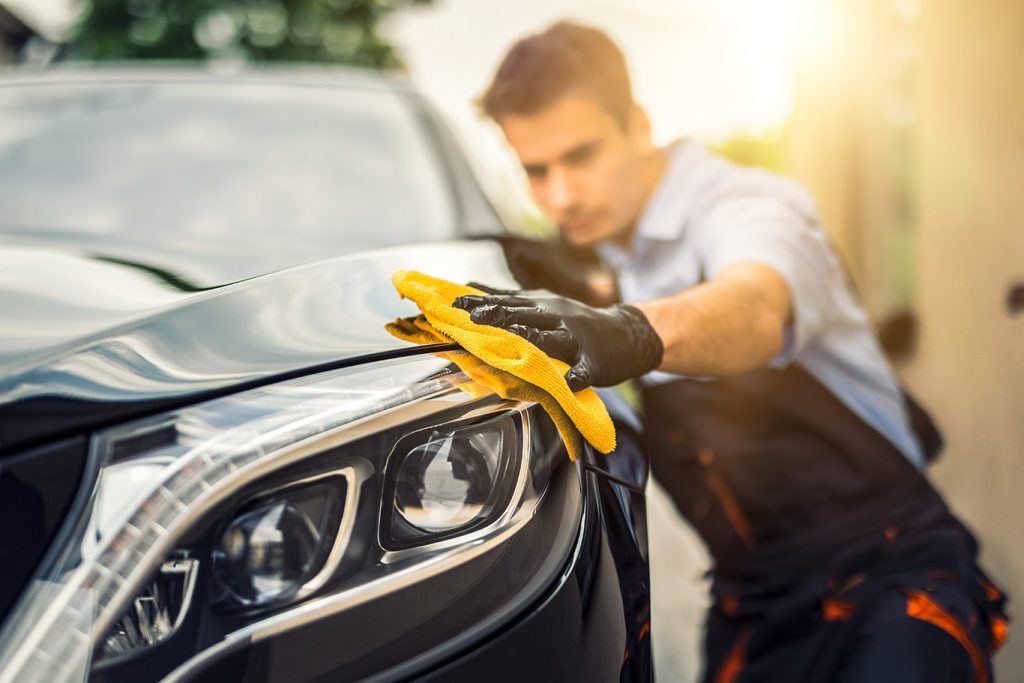
Car detailing – the man holds the microfiber in hand and polishes the car. Selective focus.
Detailing your car is a more in-depth process than your standard wash and will take longer and cost more than simply driving through a carwash. Despite the amount of time it can take, it’s still important to detail your car occasionally. Doing so helps maintain the appearance and value of your automobile.
To detail your car, it’s necessary to have the right equipment and patience. Detailing a car can take a lot of time, so many people choose to hire professionals to handle the process.
What Is Car Detailing?
Car detailing is a cosmetic process that restores the appearance of an automobile. Detailing a car may also include making minor cosmetic repairs to small damages to its interior and exterior. The focus of detailing is more on the appearance of the vehicle than mechanics. You should consider detailing your car every four to six months to keep it in its best condition.
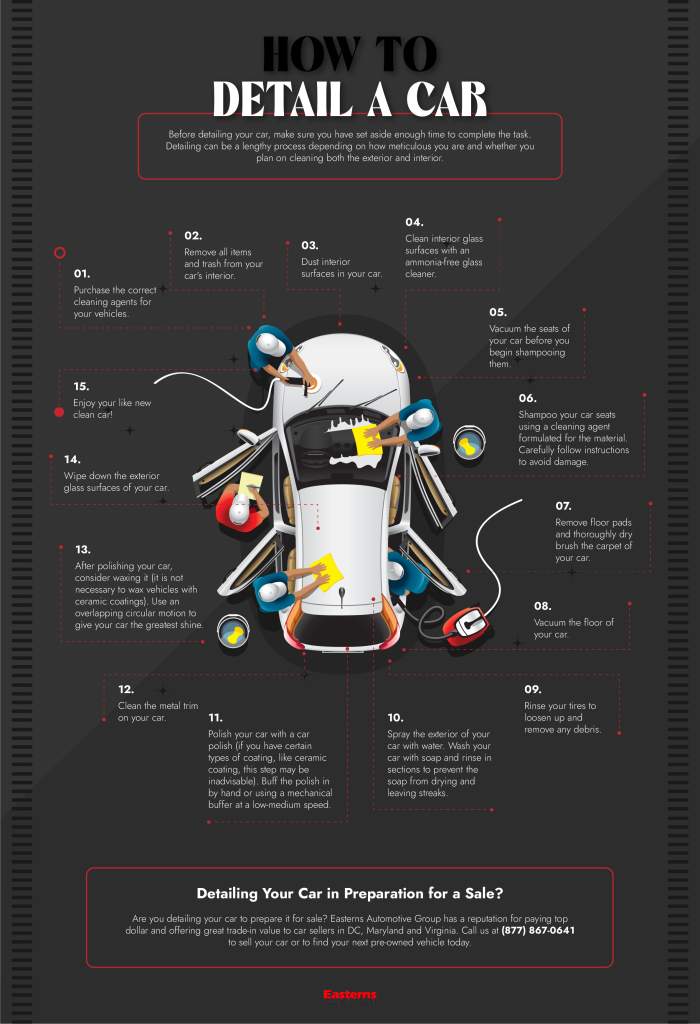
Setting aside time to detail your car will ensure you get the best results as you meticulously follow through on the steps needed.
Know What You Need
You’ll need different cleaning agents depending on the materials inside the interior of your car and its overall state of repair. Before you begin cleaning your car, make sure you have what you need. You may save yourself time and money by investing in a car detailing kit. With a premade kit you can be certain you have most everything you need to detail your car.
Bring two bins with you; one to hold items you’ll want to put back in your car after you’ve finished detailing it and one for trash. This can help you stay organized during the process of detailing the interior.
Start With the Inside
You’ll want to begin detailing your car from the inside out. This is the best way to ensure that any dust or debris from inside your car does not make it to the exterior of your car. Following this logic, while cleaning the interior of your car, begin from the top and work your way down.
Surfaces
Start by clearing out all unnecessary items from your car. Clean out your cupholders, ashtray, compartments etc. Put trash like receipts or other items you don’t want to keep in one bin. Use the second bin to keep safe items like your owner’s manual.
After you’ve removed all items from your car, begin dusting the hard interior surfaces. To do this, you’ll need compressed air spray, a towel or wipe and a bristle brush. Use the compressed air spray to purge dust out of difficult-to-reach places. Use the bristle brush to clean out your air vents.
Wipe all hard interior surfaces like your steering wheel using the proper cleansing agent for the surface. If your car has leather, use a commercial leather cleanser on a soft microfiber towel. If your car has a plastic or synthetic material interior, wipe with a damp microfiber towel first, then use a gentle cleaning agent on a towel. If this doesn’t work to remove all marks, try a gentle scrub brush. Then remove the cleaner with a damp towel and follow up with a dry towel.
Clean all glass surfaces in your car with an ammonia-free glass cleaner.
Seats
Vacuum the seats of your car, preferably using a brush head attachment. Alternate the heads when necessary to reach and remove all debris trapped in the tight corners of your car seats.
Spot treat deep stains with a strong cleaning agent and allow the agent to rest to loosen the stains.
Some cleaning agents for car seats need to be mixed with warm water to work. Follow the product label’s preparation instructions and then apply the shampoo to your car seats.
Scrub the seats after applying the shampoo with a soft brush. Be sure to focus on any stains. Rinse your brush off as it becomes dirtied in a bucket of water.
To dry your seats after shampooing them, use a soft towel to wipe away the moisture trapped in the seat materials. After wiping down the seats, park your car in the sunniest place you feel comfortable and leave your car doors open to allow the sunlight to dry up the rest of the moisture.
If your seats are leather, condition them after drying them and don’t let them sit in the sun. Carefully follow instructions on leather cleaning products to avoid damaging interior seats and surfaces.
Floors
Take off your floor pads and brush the carpet to loosen and remove any debris trapped in the fiber of your car’s floors. Use a softer brush to avoid damaging the carpet fibers of your car while you detail it.
Vacuum your floors. Your vacuum should come with multiple head attachments. Change the attachments when necessary to reach debris in all corners of the flooring of your car. Shift your seats all the way forward and backward to ensure you reach everything.
Clean The Exterior
Tires
Rinse off your tires and rims first to remove any loose debris. After that, apply wheel cleaner and allow the cleaner to sit for a minute.
Scrub your tires using a brush then use a wheel cleaner. After you’ve washed your tires, apply a protectant to prevent any damage to your tires.
Spray the exterior of your car with a hose to rinse it off.
Use a sponge or a car mitt and soap to wash your car in sections. Washing and rinsing your car in sections will prevent the soap from drying on your car and forming swirl patterns.
Soak the sponge or car mitt in water to remove any soap and rinse the soap off your car as you move along. Following this, dry each segment of your car with a soft microfiber towel.
Use a clay bar to remove any contaminants that might be stuck to the surface of your car.
Polish (If Appropriate)
Cars with graphene or ceramic coatings may not require polishing or waxing. It may be necessary to skips these steps if your vehicle has a protectant layer already applied.
Apply polish to your car in small doses and buff out the polish using a power buffer at low to medium speed or with a buffing pad.
After buffing, use a dry towel to wipe off any excess polish and dry your car.
Clean the metal trim of your car by applying a metal cleaner and wipe it down with a dry towel.
Wax
After polishing your car, take a small amount of liquid car wax on an applicator and begin spreading the wax across your car in an overlapping circle motion.
Glass
Wipe down the exterior glass of your car by using a glass cleaner. Spray the glass with the glass cleaner and then use a dry towel to wipe the cleaner off.
How long it takes to detail your car depends on how deep of a clean you’re aiming for and the state of the car when you begin detailing it. Detailing a car can take anywhere from two hours to two days depending on whether you want to clean just the interior or the interior and exterior.
It can be a big task to tackle on your own and there are professionals who can provide you with the level of service you need.
Easterns Automotive Group is the number one used car dealership for D.C., Maryland and Virginia. We have been helping all types of car shoppers find great pre-owned vehicles for more than 30 years.
Our customers can choose if they want to sell online, in-person, or a mixture of both. If you’re detailing your car to prepare it for sale, consider using our 100-percent online car sale option. Contact us to learn more about our used car inventory or look over ourinventory online.
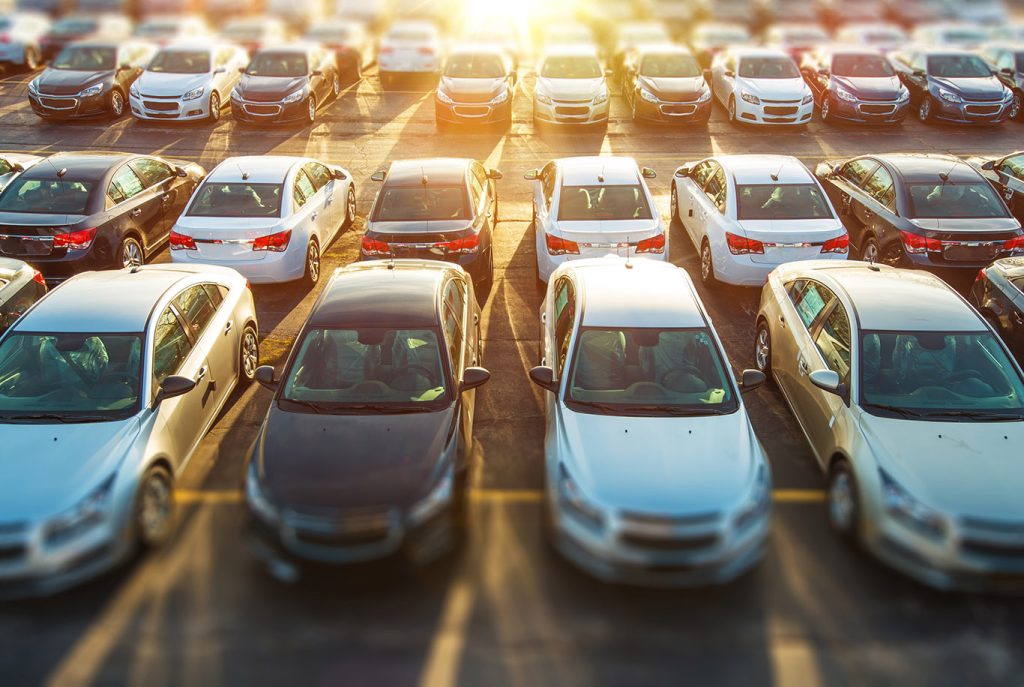
Used car dealerships receive a near consistent flow of new inventory. They receive their car inventory one of two ways, from auctions or from trade-ins. Your used car dealership might see new stock as often as every day depending on their buying practices. Keep an eye on used car dealership inventories because of how often they can change, especially if you’re on the lookout for a specific make or model of vehicle.
Auction
A dealership can get their used car inventory from two different types of auctions. One type is closed to the public and is held by car manufacturers. Closed auctions held by car manufacturers are where car manufacturers sell their stock of used cars.
These cars were often leased by the car manufacturer. Leased cars, sometimes referred to as “program” cars, are usually high-quality and kept in good condition. Maintenance is often part of the leasing program.
Another way that auctions receive inventory to sell to dealerships is through repossession. If the owner failed to keep up with their car payments the lender (via a repo company) may repossess the car and then sell it at an auction.
This type of auction is usually reserved for used car dealerships that are franchisees of the manufacturer. Cars that don’t sell at these auctions might be pushed forward to open auction.
Open auctions are available to any licensed car dealership. The used cars sold here can come in a wide variety of conditions. Some cars sold at an open auction can be relatively new with little mileage while others can have high mileage and be undriveable. Cars bought at an open auction are bought at the car dealership’s discretion. Oftentimes, car dealerships will use these auctions to both buy and sell their used car inventory.
When buying a used car, you might want to know where your car dealership bought the vehicle. A closed auction will usually have a higher quality of car than an open auction, but not always.
Trade-In
If you’re buying a new car, you might choose to trade in your previous car. This is the second way that car dealerships receive their inventory and one of the main reasons why used car dealerships almost always have new inventory.
Vehicles that were traded in can come in all sorts of states, similar to open auction vehicles. If a dealership doesn’t think they can sell a vehicle they might auction it off at an open auction. If a car is a fairly recent model year and in good enough condition, a used car dealership will likely recondition the car and sell it on their lot.
Buying your next car from an established dealership can help you avoid trouble further down the road.
When you trade in your car, the car dealership will offer you either a cash payment or they will ask if you’d like your trade-in value to be applied to the purchase of your next vehicle. Doing so may allow you to maximize the equity you have in your existing vehicle and put it toward the purchase of your next car, truck or SUV.
In general, you will want to trade in your vehicle at the same location that you plan to buy your next car from. Car dealerships will buy almost any vehicle because of the many ways they can sell it in the future, whether through an open auction or on their own lot.
Buy From a Dealership You Can Trust
Easterns Automotive Group is a family-owned business that has been operating in the D.C., Maryland and Virginia areas for more than 30 years. We are a top-rated used car dealership with over 48,000 five-star reviews.
You can buy a used car from us comfortably knowing that we carefully vet and select the cars on our lot to suit your personal needs. Our dealership uses a strict multi-point certification check to ensure that our customers can buy their next car with confidence.