At 17, Cristian Perrera migrated from El Salvador to the United States in search of better education. Cristian wasn’t familiar with the English language or culture, making his transition to the US difficult, but he didn’t allow these hurdles to stop him. Once he was able to finish high school, he received help from an organization called New Futures.
New Futures’ mission is to provide educational opportunities for rewarding careers. They provide academic scholarships, academic and career advising, skill-building workshops, and career readiness. Most of the students that come into their program are first-generation immigrants or low-income students, and their approach is to provide equitable support across the board.
New Futures helped Cristian prepare for college with the help of his advisor, Allie Sirrine. She was there for him when he graduated from Montgomery College with his associate’s degree, and she is still helping him as he pursues his dream of becoming a teacher.
Inspired by New Futures’ mission to change lives, Easterns wanted to help as well. Easterns Automotive Group surprised New Futures with a donation of $2,000 to support their Power On fundraiser. Completely shocked and grateful, Allie shared that this is enough to cover a school semester for one of their scholars. We are honored to support this remarkable initiative.
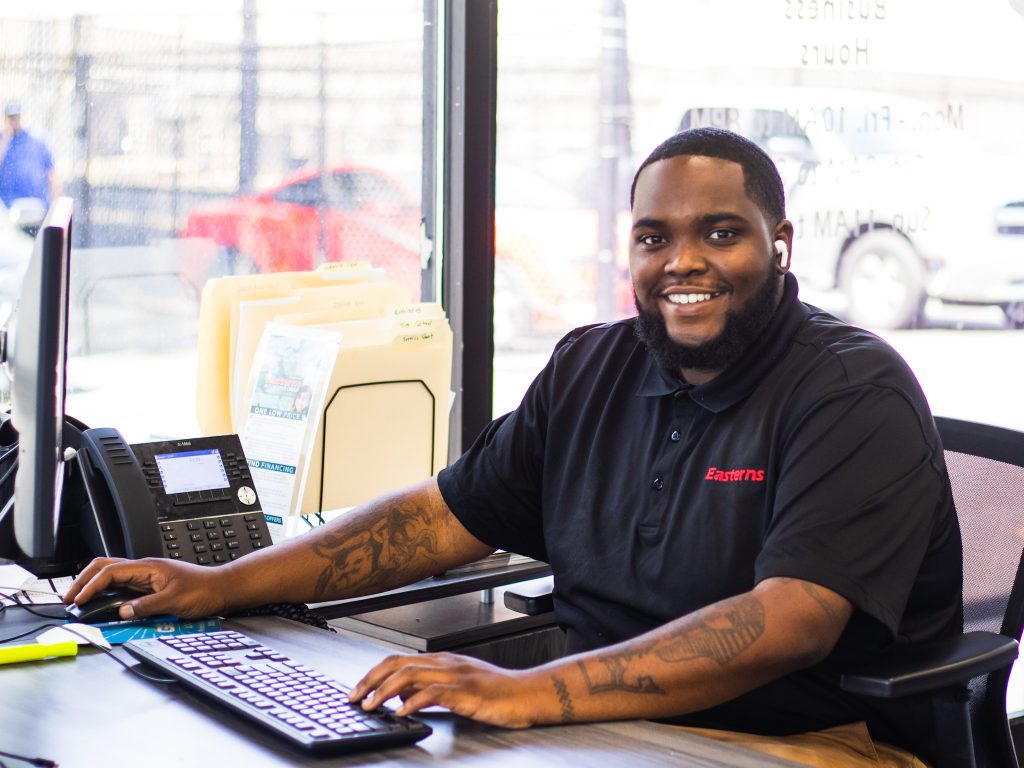
Malik Ray has been a customer advisor at Easterns in Temple Hills for almost three years! Before working with Easterns Malik was helping others with roadside assistance.
His favorite part about working with Easterns is the diversity in cars! You never know what we may have available next! When he is not helping customers find the perfect ride, his favorite thing to do in his free time is spending time with his baby girl, Tyler.
When it comes to finding the perfect ride for customers, he likes to recommend eco-friendly, fuel-efficient vehicles that require low and inexpensive maintenance. Easterns inventory always has a wide variety of cars with these features.
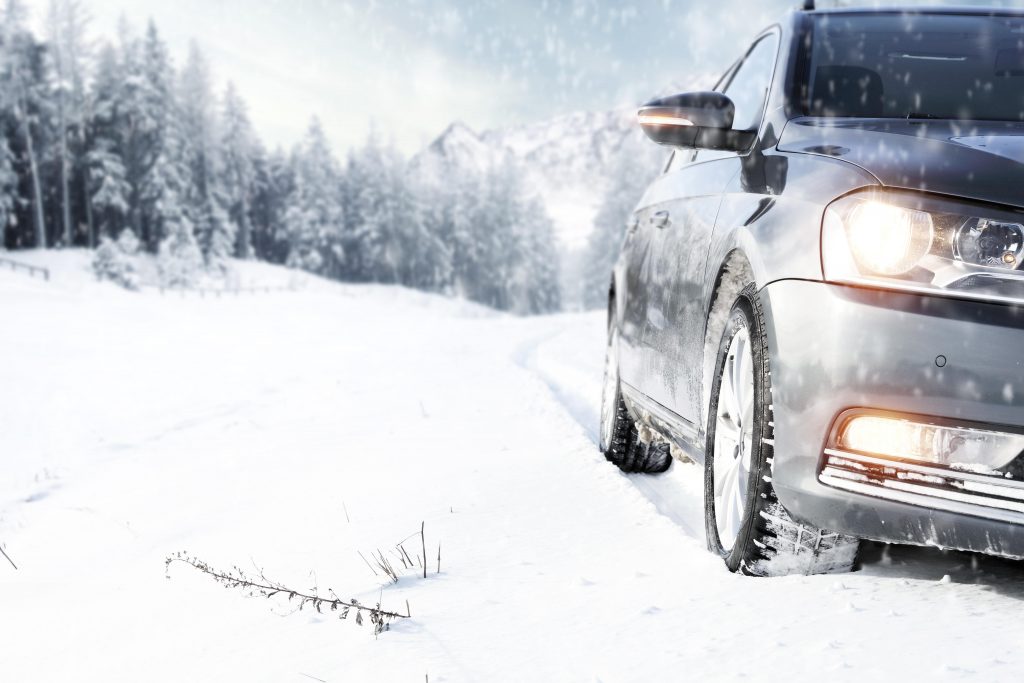
What are the best vehicles for winter driving? That depends on where you are. Baltimore and Washington D.C. get between a foot and a foot and a half of snow on average each year. While snow-covered roads certainly aren’t unheard of, the tend to be less of an issue here than elsewhere in country.
However, snow isn’t the only factor that can complicate winter driving. The low temperatures and the presence of ice can also lead to some potential problems.
All-Wheel Drive (AWD) or Four-Wheel Drive (4WD)?
Most AWD vehicles are either primarily front-wheel drive or rear-wheel drive vehicles. They might also use part-time and full-time AWD.
Part-time all-wheel drive only transfers torque to the other set of wheels when the primary set of wheels starts to slip. In a part-time front-wheel drive AWD vehicle, the torque wouldn’t be transferred to the back wheels until the front started slipping.
In a full-time all-wheel drive vehicle, all four wheels are getting some torque all the time. The amount of torque is adjusted based on road conditions. Current generation Subaru are examples of vehicles that use full-time AWD.
Four-wheel drive keeps both axles spinning at the same speed all the time. This tends to reduce wheel spin when roads are slippery and traction is minimal, but it makes cornering more difficult than you’d experience in an all-wheel drive vehicle.
Any of these AWD modes of 4WD can help improve traction, stability and control in snowy or icy conditions.
Other Safety Features for Winter Driving
Stability Control With Anti-Lock Brakes: Anti-lock brakes aren’t a new or uncommon feature in modern vehicles, but they can make winter driving a lot safer when they’re combined with stability control. Stability control ensures braking is applied specifically to wheels that are sliding to bring vehicles under control more quickly in dangerous snow and ice conditions.
Automatic High Beams and Adaptive Headlights: Automatic high beams are convenient because they switch themselves off when they detect other vehicle headlights or taillights. Adaptive headlights rotate slightly with your steering wheel to provide maximum illumination when you’re making turns.
Blind-Spot Monitoring: People can miss cars in their blind spot even when there isn’t snow or bad weather, but it’s a much easier mistake to make when conditions are snowy or foggy. Quick evasive swerving to avoid a blind spot accident commonly leads to a loss of control in snowy or icy conditions. Blind-spot monitoring can help prevent that from happening.
Forward Collision Emergency Anti-Lock Braking: A forward collision warning system that automatically engages anti-lock brakes can give you a much better chance of avoiding rear end accidents in snowy or low-visibility conditions, especially when roads might be slippery.
Heated Mirrors: When people are in a hurry to get to work or get their kids to school in the morning, they sometimes neglect complete deicing. Heated mirrors can help prevent accidents caused by obstructed mirrors and low visibility.
Remote Start: The benefits of remote start in snowy and cold conditions are similar to the benefits offered by heated mirrors. If you’re able to start your car remotely before you walk out your door and give it extra time to warm up, you’re more likely to avoid driving off before your vehicle is ready to safely operate in the cold.
Snow Tires (or Winter Tires): A lot of proponents of snow tires don’t like people calling them snow tires. It doesn’t necessarily have to be freezing and stormy for these tires to be useful during a Baltimore or Washington DC winter. That’s because they’re made of specially formulated rubber that stays soft when outside temperatures are below 50-degrees Fahrenheit. They provide better control and tension and offer more reliability in cold conditions than tires made of rubber formulated for driving in 50-degree to 100+-degree weather.
They also provide better grip and control when ice or snow are on the roads.
Are You Looking for a New Car Before Winter Starts in Maryland and Virginia?
Dealing with winter driving conditions with an old, unreliable vehicle is often unsafe and can put you and your passengers at risk. Easterns Automotive Group performs thorough checks on every pre-owned vehicle we sell to ensure every customer drives off the lot with a reliable car, truck or SUV that won’t let them down when conditions outside are less than ideal for driving.
Browse our inventory or pre-owned vehicles and don’t hesitate to give us a call at 877-867-0641 if you have any questions. You can also stop by one of our eight convenient locations in the Washington DC and Baltimore areas.
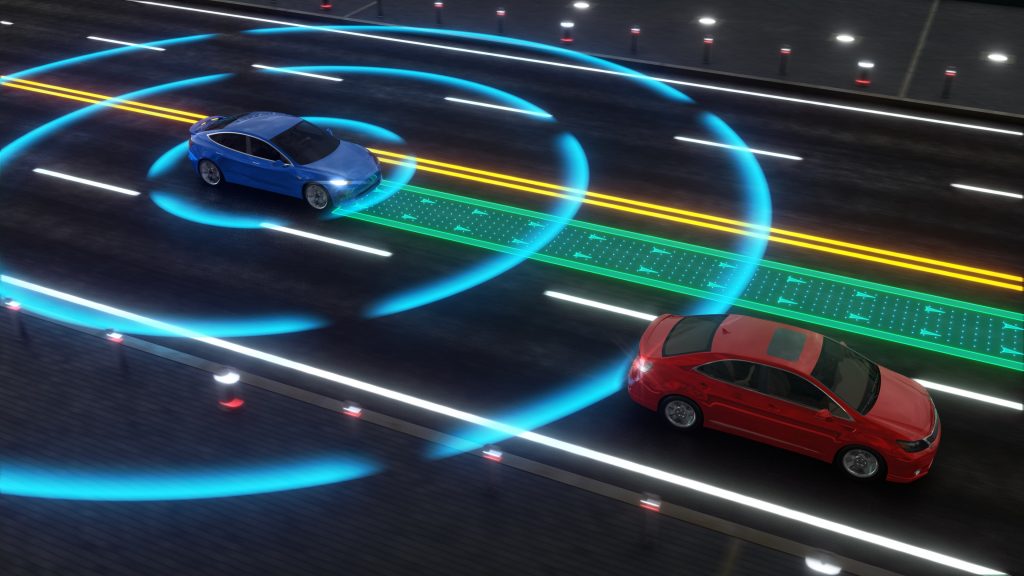
There are many different technologies that are making the roads safer for drivers. Some of these technologies come standard in vehicles sold today while others are more commonly included in vehicles as addons.
Some of these safety features, like lane departure warnings, blind spot warnings and backup cameras, have been common long enough that they’re now frequently available in pre-owned vehicles. Others, like anti-lock brakes and stability control, may have been keeping you safe without you even consciously using them.
Auto accident fatalities have been trending downward in recent years. Many experts cite improved safety features as one of the reasons roads are becoming safer for drivers.
Many newer cars offer some kind of forward collision warning. The car will sound an alert or the steering wheel will start to vibrate if sensors or cameras in the front of your car detect an imminent forward collision.
Some vehicles go a step further with forward collision emergency braking – essentially your car will automatically slam on the brakes if it determines you’re about to hit a vehicle or object in front of you.
Lane Departure Warnings and Lane Assist
Lane departure warning systems usually make a noise or display some kind of blinking indicator on your dashboard to let you know that you’re drifting out of your lane. Lane assist takes things a step further by essentially keeping your vehicle centered in its lane. It’s important to note lane assist is very different from an autonomous vehicle, but it can help prevent accidents, especially if you’re distracted.
Backup Cameras
Every new vehicle sold in the United States has been required to have a backup camera since the 2019 model year. Even during the early years of the technology, NHTSA analysis suggested backup cameras reduced back-over injuries by as much as eight percent and deaths by as much as 31 percent. The NHTSA estimates backup cameras in every vehicle might save between roughly 60 and 70 people per year. In a country where between about 36,000 and 38,000 people are estimated to die from auto accidents each year, that number may not seem very impactful, but it certainly makes a difference to those who could be injured.
Airbags
These days it’s difficult to find a working car that doesn’t have airbags of some kind. Estimates suggest airbags reduce deaths in accidents by as much as 11 percent. Curtain and side airbags may increase auto accident deaths by between eight and 42 percent.
Adaptive Headlights
Wouldn’t it be nice if headlights pointed in the direction you were turning? That’s the idea behind adaptive headlights. They pivot slightly to illuminate turns. Insurance studies have suggested adaptive headlights might reduce damage claims by nearly six percent and accident claims by just over one percent.
While that may not seem like a huge number, it’s not nothing when you consider there are millions of accidents in the U.S. every year.
Blind Spot Monitor
One of the more useful accident-avoidance technologies increasing in popularity in recent years are blind spot detection systems. Your vehicle might throw up a light on your side mirrors if there’s a car, truck or SUV in your blind spot. If you put on your blinker to merge into that lane your vehicle may start sounding off chimes to warn you. Some blind spot detection systems will even automatically brake or steer the car away from the other vehicle.
The Insurance Institute for Highway Safety estimates that a blind spot detection system can reduce lane-change crashes by as much as 13 percent and lane-change accidents that result in injuries by as much as 23 percent.
Is Your Vehicle Safe for the Roads in Baltimore and Washington DC?
One of the benefits of finding a newer preowned vehicle are the addition of modern safety features. Many of the vehicles on our Easterns Automotive Group lots are equipped with an array of cutting-edge safety features designed to help you avoid accidents.
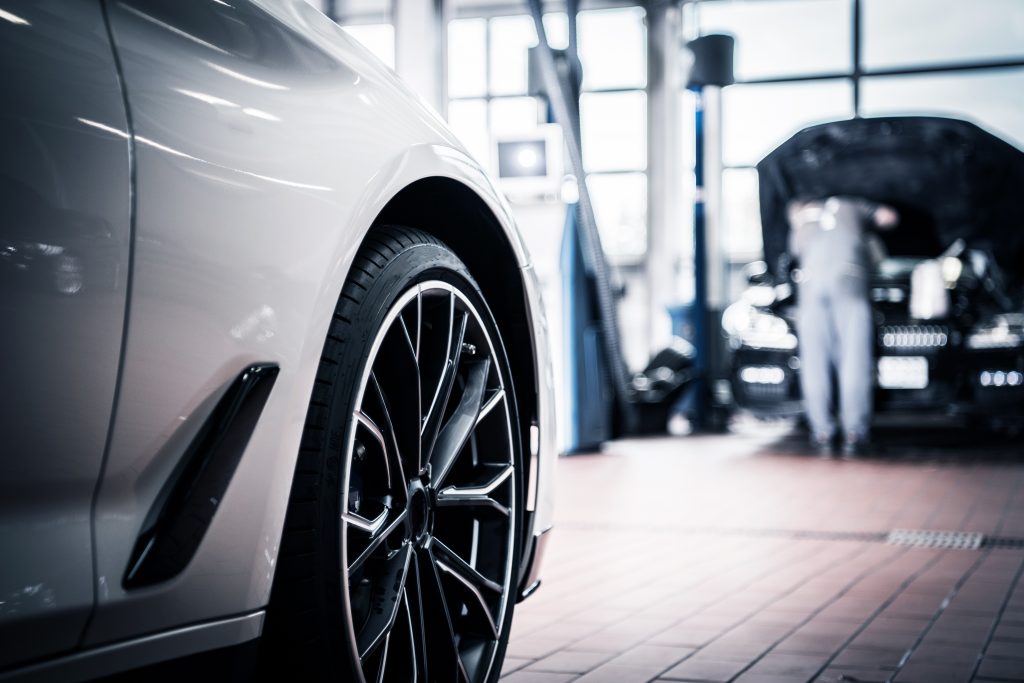
Auto Service and Vehicle Maintenance by Professional Technician in the Background. Automotive Industry.
The most important factors that determine the valuation of a pre-owned vehicle are its make, mileage and age. Other factors, like being involved in a serious accident or being flooded, might supersede age or mileage in importance in some circumstances.
There are a lot of other lesser factors that might also have a significant impact on the valuation of a pre-owned vehicle. Fuel efficiency, aesthetics, physical condition, safety features, addons and maintenance history are a few examples.
There are many things that you as the owner can do to ensure you get the most value possible when selling your current car, truck or SUV. Staying on top of routine maintenance is one of those things.
5,000 Miles
There are a lot of things on your vehicle that need to be replaced periodically. These various components are often broken out into a few different mileage umbrellas.
Oil changes rank at the top of the list for frequency. Depending on the quality of the oil and the age of the engine, you should consider getting the oil changed every 3,000 to 7,000 miles.
While many manufacturers recommend 3,000 or 3,500 miles, a lot of mechanics will tell you 5,000 is probably fine. Older vehicles might benefit from high mileage oils and more frequent oil changes, especially if they’re inching towards 200,000 or more miles. Different cars have different needs, so you should always look at what your manufacturer recommends and what other owners have experienced.
One of the benefits of getting your oil and oil filter professionally changed are all the other things the service specialists will throw in. They’ll generally check a number of fluid levels, including coolant, power steering, brake fluid and even your windshield washer fluid. They’ll also do things like check your tires, check your battery health, air and cabin filters etc.
Having this cursory checklist performed every 3,000 to 7,000 miles can help ensure the longevity of your vehicle and protect its value in the long run.
25,000 Miles
Roughly every five oil changes you should also have several other components checked or replaced. These include:
Fuel filters
Power steering fluid
Although they may not need to be replaced, things like brake pads and hoses should also be checked. It’s also a good time to ensure air conditioning systems and other important comfort components are working properly. Your battery may also need to be replaced every 25,000 to 35,000 miles, depending on the quality of the battery and the climate in which you drive.
40,000 Miles
Important components that may need to be checked or replaced at 40,000 miles include:
Spark plugs and your vehicle’s ignition system
Suspension
Brake fluid
The quality of your vehicle’s spark plugs has a lot to do with how frequently they need to be replaced. The new titanium and iridium spark plugs might be able to continue operating at upwards of 100,000 miles.
60,000 Miles
How you drive has a lot to do with how long you can expect your vehicle’s brakes to last, but some people use 60,000 miles as a general rule of thumb for pad replacement and rotor resurfacing. You should ideally have your brake pads checked semi-frequently during oil changes or other maintenance and inspection visits.
Brake rotors don’t always need to be replaced. In some cases, they can be smoothed and continue performing safely.
At roughly 60,000 miles it’s usually a good idea to flush and completely replace a vehicle’s coolant. Manual transmission vehicles might also need their transmission fluid replaced every 50,000 to 60,000 miles. There’s more of a range with automatic transmission fluids, with some only requiring replacement every 90,000 to 100,000 miles.
90,000 Miles
Vehicles that still use timing belts instead of timing chains should probably have the belt replaced about every 80,000 to 90,000 miles. Your manufacturer may recommend replacing the timing belt more frequently.
Many modern vehicles use timing chains, which are much less likely to break. However, timing chains can stretch over time, so it’s not a bad idea for it to be inspected, especially once a vehicle gets over 100,000 miles.
The Value of Your Car Is in Its Remaining Mileage
When someone buys a used car in Washington DC or Baltimore, they are essentially buying its remaining mileage. A poorly maintained car that will only reliably go another 30,000 miles will inevitably be worth less than a well-maintained vehicle that has another 100,000 to 150,000 miles of life left in it.
Car owners can’t personally do anything about market forces or the popularity of their vehicle, but they do have complete control over their own vehicle’s maintenance and physical condition.
Call us at 877-867-0641 if you’re interested in selling your current car, and make sure to browse our inventory if you’re in the market for a great, well-maintained pre-owned vehicle.
Many car shoppers incorrectly assume that leasing is only an option for new car buyers. If you’ve never leased a vehicle before but you’re currently in the market for a preowned car, truck or SUV, you may want to consider leasing.
There are several benefits to leasing a preowned vehicle. The lower valuation of a used car means your monthly payments will be lower. The reduced valuation at the end of your lease term might also let you purchase the vehicle for a greatly reduced price.
Easterns Automotive is here to help if you’re unfamiliar with the leasing process.
How to Lease a Used Car
Determine how much you can afford to pay each month. This step isn’t all that different from getting an auto loan. Look at your monthly budget and decide what you can reasonably spend on transportation before you start shopping for a pre-owned vehicle to lease.
Decide what type of car you want. What’s important to you in a vehicle? Good gas mileage? Safety features? Functionality and storage? One of the benefits of leasing a pre-owned car from Easterns Automotive is our diverse inventory of used cars, trucks and SUVs. You’re sure to find the perfect vehicle at one of our eight locations in the Washington DC and Baltimore areas.
Consider looking into how different vehicles might impact your insurance premiums. Certain vehicles might increase or decrease your monthly payment based on things like valuation, age, safety features and vehicle type.
Test drive cars you are considering. You should treat your lease shopping experience just like you would any car buying experience. Visit a dealership and test drive the cars you’re interested in leasing.
Talk to Easterns Automotive about financing. Some people may need to finance a down payment on their pre-owned lease from Easterns Automotive. We offer competitive rates and strive to simplify your leasing experience by handling everything in house.
Can You Lease to Own?
Leasing is often a great deal for pre-owned shoppers in Washington DC and Baltimore because they get to use a reliable vehicle for years and then have the opportunity to buy it for a massive discount at the end of their lease term.
Both new cars and used cars that are being leased will be assigned a “residual value” – the estimated value of the car at the end of your lease. Lenders or third-party rating agencies determine what the residual value will be for pre-owned vehicles. You have the opportunity to purchase the vehicle you lease at the end of your lease for that residual amount.
Sometimes the residual value the lending agency sets is too low. For example, used car prices are particularly high due to COVID-19-related shortages. Someone who started their lease in 2019 will get to purchase their lease for the 2019 residual valuation, not the 2021 valuation.
With new cars you’re stuck with the residual value set by the manufacturer instead of the lender. It’s rare for people to get really great deals on leased new cars since those valuations are likely still high if the vehicle is only a few years old at the end of the lease.
Why Steep Depreciation of New Cars Makes Leasing a Bad Deal
Your lease amount is based on the valuation of the vehicle you’re purchasing. A new car’s value drops about 20 to 30 percent the first year you own it, but your lease payments will stay the same regardless.
Imagine leasing a new car worth $50,000, putting down a $5,000 down payment and getting a monthly payment of $575. A year later that car would only be worth $37,500. If you put down the same $5,000 on a $37,500 car your monthly payments might only be about $400. Unfortunately, you’re locked in at that $575 for the entire lease, regardless of how much the vehicle depreciates over the course of your lease term.
By the time you lease a pre-owned car, chances are the steepest slope of depreciation will be behind it. That means the depreciation in value three or five years later won’t be nearly as dramatic as it would have been had you leased a new car.
Learn More About Leasing a Great Used Vehicle from Easterns Automotive Group
Are you looking for an affordable way to get a great used vehicle? Do you want the option to buy the vehicle in the future at a discount? Leasing a pre-owned vehicle might be the best option for you. Call Easterns Automotive Group at 877-867-0641 or stop by one of our eight locations in the Washington DC and Baltimore areas.
Craig is a former NHL player and currently NBC Sports Washington Capitals TV analyst. In April 2018 his wife, April Laughlin, was diagnosed with a rare form of endometrial cancer, uterine serous carcinoma, which only affects approximately 6,000 women per year in the United States.
It started with the Hockey fights cancer in the NHL initiative, and at that point, the Laughlin family decided they needed to do more. They started the Laughlin Family Foundation. Their non-profit is on a mission to fund initiatives to advance the care and research around rare cancers.
Easterns was honored to support this incredible foundation in their fight to fund and advance the treatment and study of rare cancers.
For LGBTQ plus families often, support when it comes to raising a family is hard to find. However, the organization Rainbow Families has been doing fantastic work that is now being recognized and awarded.
Sequoia and Shay Taylor El began looking for an option to create the family they always dreamed of in 2015. It may seem easy for parents to create families; however, that’s not the case. They often have to go through a different legal process and pay more money to get the same protection as regular parents.
They were introduced to Darren Paul Vance, the executive director of Rainbow Families, as a support system during their difficult journey. Rainbow Families’ goal is to continue evolving and growing to make sure that they are meeting the needs of the LGBTQ plus community.
For 40 years now, Rainbow Families have celebrated LGBTQ plus families with educational classes parrot for training workshops, picnics, play dates, and its annual family conference. To continue their fantastic work in the community, Easterns Automotive Group surprised Rainbow Families with $2,000.
Brandon Fennell has been a manager with the Easterns team for a year, and he constantly strives to provide our customers with the best car buying experience.
Brandon loves to travel and has lived in several states, but his favorite is Frederick, Maryland, because of the beautiful weather. He has always had a love for cars. Before moving to Frederick from NE Pennsylvania, Brandon was a mechanic and restored off-road trucks. His passion for restoring trucks started with a senior project in high school, and it has grown from there.
Brandon’s favorite part about working at Easterns is the wide variety of vehicles, as well as the people he works with at our Frederick location. “We spend a lot of time together, so we really have created a family atmosphere, and for the best experience, we try to convey this friendly environment to our customers as well.”
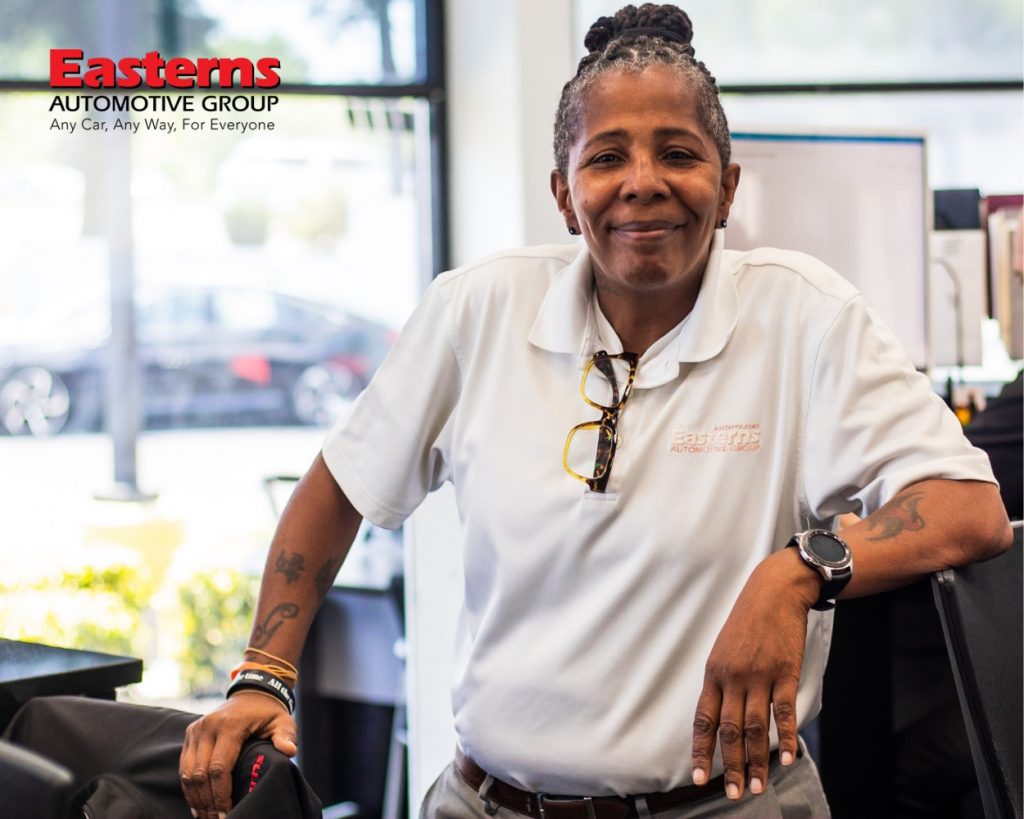
Meet more of our Easterns Family! Glenda Bradley has been helping customers find their perfect ride at our Temple Hills location for eight years. However, she has been in the automotive industry for 13.
What car would Glenda recommend for new drivers?
When assisting families or helping first-time buyers find the perfect vehicle, her go-to recommendations are Kias, Toyotas, or Hyundais. She explained, “Toyota’s are the best with regular maintenance. They will last forever! While Kia and Hyundai have the best warranties of all manufacturers. Hands down!”
Her favorite aspect of working at Easterns is the family atmosphere. When she is not finding the perfect match for customers, she loves to cook exotic foods in her free time. We are grateful to have Glenda as a part of the team. Thank you for all of your hard work, Glenda